
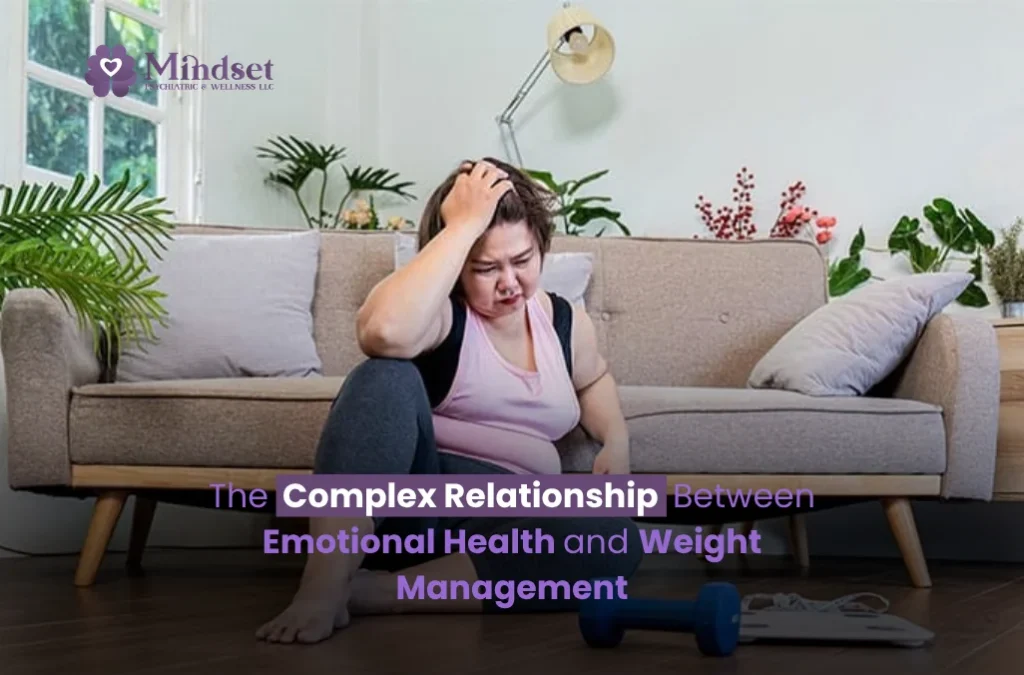
Most weight loss advice treats the body like a math problem. Eat less, exercise more, watch the number go down. That math just doesn’t add up for a whole bunch of people, and they aren’t wrong. And you know why? Because emotional health and body weight are tangled in knots that a calorie count never unravels.
Not a fringe idea either. It’s a well documented, bidirectional relationship, meaning depression and stress can drive weight gain, and weight gain and everything that comes with it can drive depression right back. Figuring out which came first usually matters less than accepting both sides need real attention at once.
The Loop Runs in Both Directions
The nature of the relationship between depression and obesity is even more entangled than previously realized, with researchers terming it truly bidirectional, each increasing risk for the other over time rather than one causing the other in a linear pathway.
One of the clearer links is emotional eating, eating in response to feelings rather than actual hunger.
A large prospective study following adults over seven years found emotional eating actually mediated the link between depression and long term weight gain. Meaning it worked as a real behavioral pathway connecting the two, not just some coincidental habit that happened to show up alongside depression.
Why Stress Specifically Drives This
The biology behind stress eating isn’t vague or metaphorical. Chronic stress, anxiety, and depression activate the hypothalamic-pituitary-adrenal axis, the body’s central stress response system, which raises cortisol throughout the body.
Elevated cortisol does two relevant things, according to a narrative review on emotional eating and abdominal obesity.
It pushes fat storage specifically toward the abdomen and it increases what researchers call hedonic hunger — the drive to eat for pleasure and reward rather than actual physiological need.
That’s part of why stress eating skews so hard toward energy dense, highly palatable food instead of, say, an extra plate of vegetables. The body isn’t randomly craving comfort food. It’s responding to a specific hormonal push toward high reward eating.
Interestingly, how strongly someone’s cortisol spikes under stress seems to predict how much they actually eat afterward, but mostly in people already managing obesity. One study measuring cortisol reactivity directly found that people with obesity who had a bigger cortisol spike under stress ate a lot more at a follow up meal than those with a smaller spike, while that pattern barely showed up in people at a healthy weight. So it’s not just “stress makes everyone eat more.” For some people, their specific stress response makes them considerably more vulnerable to this than others.
Willpower Isn’t Really the Variable Here
Calling emotional eating a willpower failure misses what’s actually going on physiologically. Research has tied it to a handful of underlying factors: trouble regulating emotions in general, poor interoceptive awareness, meaning difficulty accurately reading the body’s own hunger and fullness signals, and a blunted stress hormone response that leaves someone chasing a reward signal food can temporarily deliver.
None of that is a character flaw. It’s a set of regulatory systems that, in some people, developed to respond to distress with food specifically, sometimes shaped by early life experience and genetics working together. Treating it purely as a discipline problem just piles shame on top of an already hard pattern, without touching what’s actually driving it.
Why This Changes How Weight Management Should Actually Work
If emotional eating is functioning as a genuine link between depression and weight gain, a plan that only addresses food and exercise is missing a real piece of the picture for a lot of people.
Shows up clearly in the research on chronic dieting specifically. Restrictive dieting, ironically, has been shown to predict future weight gain rather than prevent it, and researchers studying emotional eating point to dietary restraint itself as a disinhibiting factor. Meaning strict restriction can actually make someone more vulnerable to an emotional eating episode once willpower runs out, not less.
That’s part of why researchers have started pushing for weight management matched to whatever’s actually driving someone’s eating pattern, rather than one generic diet plan handed to everyone regardless of what’s underneath it. Someone whose weight struggles trace back to depression and emotional eating needs a fundamentally different starting point than someone whose eating isn’t emotionally driven at all.
What Actually Helps When Emotional Health Is Part of the Picture
Addressing depression directly, through therapy, medication or both, tends to reduce emotional eating as a downstream effect, since the eating pattern is usually responding to the underlying emotional state rather than existing on its own!
Building interoceptive awareness, actually learning to tell physical hunger apart from emotional discomfort, gives people a concrete skill to interrupt the pattern before it runs the same script it always has.
Improving sleep matters more than it sounds like it should, given how strongly it changed the emotional eating to weight gain relationship in the research above. Not a minor lifestyle tip here. A real variable that shifts how much emotional eating actually turns into physical weight change.
Mindful eating approaches, which build awareness around what’s actually driving an eating impulse in the moment, have emerging support for interrupting the automatic, emotion driven cycle rather than relying on restriction alone.
Why Treating This Together Beats Treating It in Sequence
Someone managing both depression and weight concerns often gets pushed through two separate systems, one after the other. Handle the weight first, then maybe deal with mood. Or the reverse. That sequencing tends to leave the actual mechanism connecting the two completely untouched, which is exactly why progress on one side so often stalls or reverses once attention shifts away from it.
A more integrated approach treats the emotional and physical sides as one connected picture from the start, addressing the psychological drivers of eating alongside actual physical health, rather than assuming one will simply sort itself out once the other improves.
What This Looks Like at Mindset Psychiatric Wellness
If weight struggles have felt tangled up with mood, stress, or emotional patterns that diet advice never quite touches, that’s not a sign you’re missing some obvious fix everyone else has already figured out. It’s a sign the emotional piece needs real, direct attention alongside anything physical.
Mindset Psychiatric Wellness can help you understand what’s actually driving your specific pattern and build a plan that treats both sides together. Reach out to schedule a consultation.