
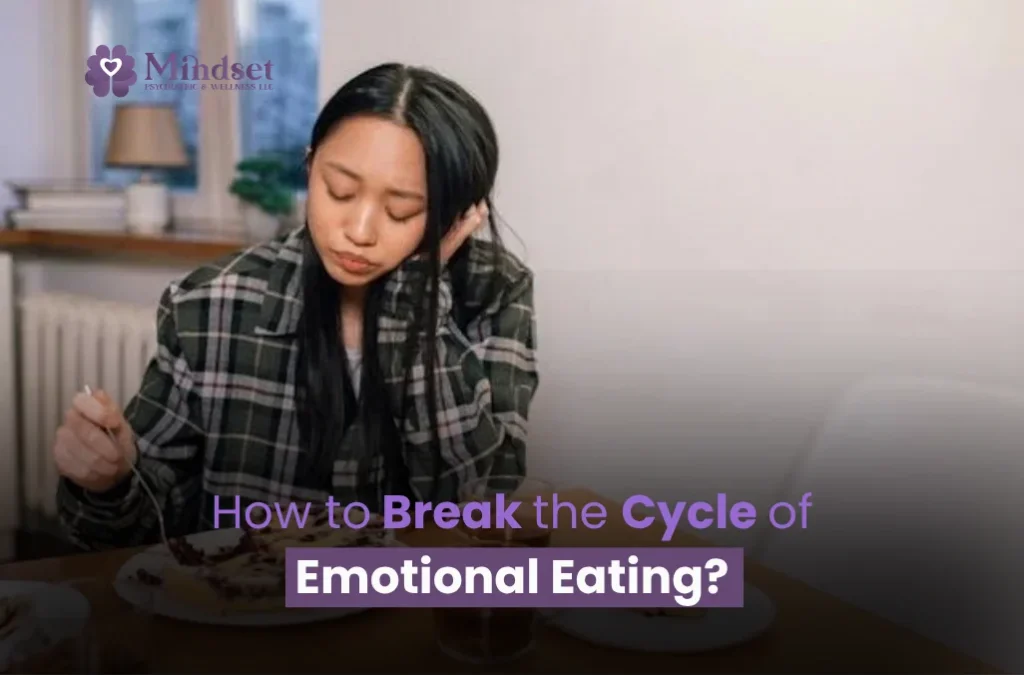
You open the fridge and you’re not even hungry. You just stand there anyway, looking for something that’ll make the day feel a little less loud.
If that sounds familiar, you’re in good company. Some researchers think as much as three-quarters of overeating has nothing to do with actual hunger. It’s not a willpower issue. It’s your body doing exactly what it was designed to do, just pointed at the wrong problem.
What’s Actually Happening in Your Body
Here’s the short version. Stress kicks your adrenal glands into gear and they pump out cortisol, which raises your blood sugar and sends you looking for fast energy. That usually means carbs, sugar, something quick.
That mechanism kept our ancestors alive when they had to outrun something dangerous. These days the “danger” is more likely an inbox or an argument you’re still replaying in your head, and there’s nothing to physically run from. The hormones show up anyway. Food becomes the fastest way to shut them up.
There’s also a dopamine piece to this. That first bite of something sweet or fatty genuinely does make you feel better for a few minutes. Then it wears off, sometimes guilt moves in right behind it, and you’re right back where you started, looking for the next hit.
Telling Real Hunger From Emotional Hunger
This one trips people up because emotional hunger doesn’t feel made up. It feels completely real in the moment.
Real hunger builds gradually. It can wait twenty minutes while you finish what you’re doing. Pretty much any food sounds fine when you’re actually hungry.
Emotional hunger doesn’t work that way. It shows up fast, sometimes out of nowhere, and it usually wants one specific thing, not food in general. Chips. That one candy bar. A particular order from the place down the street. And even after your stomach’s full, it doesn’t feel done, because food was never really what you needed.
What Tends to Set It Off
For a lot of people it’s boredom, more often than sadness honestly. Sitting alone in the evening with nothing to distract you is a classic trigger. So is loneliness. Anxiety pushes plenty of people toward the kitchen too, and so do habits from way back, growing up in a house where food meant comfort or reward.
None of that makes you broken. It just means something worked once, food calmed you down, and your brain filed that away as a solution worth repeating.
What Actually Helps
Forcing yourself to white-knuckle through a craving usually backfires. The craving just gets louder the next time. What works better is slowing down long enough to notice what’s really going on before you grab anything.
Check in before you eat. Give it fifteen seconds. Are you hungry, or are you anxious, tired, bored, lonely? Just naming it out loud, even to yourself, breaks the autopilot that emotional eating usually runs on.
Have a non-food option ready. If it’s boredom, a short walk or a text to a friend can interrupt the loop just as fast as a snack would. If it’s stress, a few slow breaths can bring cortisol down enough that the craving loses some of its pull.
Make trigger foods a little harder to reach. Not banned, just out of the front of the fridge or the counter. That extra ten seconds of friction is often enough to make you pause and actually decide instead of react.
Skip the guilt afterward. Beating yourself up after an emotional eating episode rarely helps. It usually just adds one more uncomfortable feeling to the stack, which can send you right back to the kitchen. Noticing what happened without piling on shame makes the next choice easier.
When It Runs Deeper Than a Habit
Some people work through this with a bit more awareness and a few small changes. For others, it’s tangled up with something bigger, anxiety that’s been building for years, depression, stress that never really lets up.
If food has become your main way of coping, if the guilt afterward feels heavy most days, or if this is starting to affect your weight or your mood, that’s worth bringing to someone. Not because you’re failing at this. Because whatever’s underneath it deserves more than a better snack list.
We Look at the Whole Picture
At Mindset Psychiatric & Wellness, we rarely see emotional eating show up alone. It’s almost always connected to anxiety, stress, or something that’s been running quietly in the background for a while. We work with both sides of that together, the emotional piece and the physical piece, instead of treating one and ignoring the other.
If you’re ready to understand what’s actually driving this for you, reach out to Mindset Psychiatric & Wellness in Everett, MA. Let’s figure out where to start.